
STAINLESS STEEL SLEEVES
- Home
- Exotic Metal Fasteners
- Stainless Steel Sleeves
Stainless Steel Sleeves are cylindrical components used in industrial machinery, engineering assemblies, piping systems, and equipment installations. Depending on their design, they can provide spacing, protect shafts, support alignment, cover exposed sections, or act as protective liners and inserts. Sunmach provides an enquiry point for Stainless Steel Sleeves intended for a variety of industrial and engineering requirements. Depending on availability and the application, sleeves may be specified in different stainless steel grades, diameters, lengths, wall thicknesses, and configurations. Whether you need a standard sleeve, a precision-machined component, or a sleeve manufactured to a technical drawing, choosing the right material and dimensions is essential for fit, durability, and reliable performance.
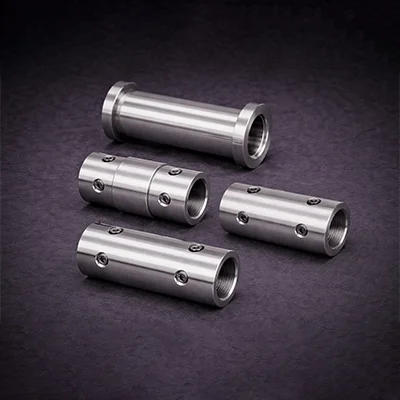
What Are Stainless Steel Sleeves?
Stainless Steel Sleeves are hollow cylindrical components designed to fit over a shaft, inside a bore, around a fastener, or within a mechanical assembly. Their purpose varies according to the application and may include spacing, surface protection, alignment, reinforcement, or providing a replaceable contact surface.
Stainless steel is often selected for its corrosion resistance, strength, and suitability for many industrial environments. However, the performance of a sleeve depends on the selected grade, dimensional tolerances, surface finish, loading conditions, and exposure to moisture, chemicals, or elevated temperatures.
Stainless Steel Sleeves are used in general engineering, manufacturing equipment, pumps, valves, automotive systems, and other applications where a durable cylindrical component is required.
Key Features of Stainless Steel Sleeves
- Corrosion resistance: Suitable grades can help resist corrosion in many industrial environments.
- Mechanical strength: Provides a durable cylindrical component when correctly specified for the application.
- Dimensional flexibility: Inside diameter, outside diameter, length, and wall thickness can be specified according to requirements.
- Multiple configurations: May be used as spacers, protective covers, shaft sleeves, or tubular inserts.
- Surface protection: Can help protect a shaft or other component when designed and installed appropriately.
- Precision options: Specified tolerances and surface finishes can support accurate assembly requirements.
- Industrial versatility: Suitable for a broad range of mechanical and engineering applications.
Actual performance depends on the material grade, component design, manufacturing quality, installation, and operating conditions.
Applications of Stainless Steel Sleeves
Stainless Steel Sleeves are used across several industries and engineering applications.
Industrial machinery
Used for spacing, component protection, and mechanical assembly.
Pumps and valves
May be used in selected equipment assemblies, depending on pressure, temperature, fluid compatibility, and design.
Automotive equipment
Used in suitable shaft, mounting, and mechanical systems.
Manufacturing equipment
Supports alignment, positioning, and component protection.
Construction and infrastructure
Used in selected mechanical and structural assemblies.
Marine applications
Selected grades may be suitable for some moisture-exposed environments when corrosion requirements are properly evaluated.
Food-processing equipment
Used where the material, finish, and component design meet applicable hygiene requirements.
General engineering
Suitable for custom assemblies, tubular inserts, and spacer applications.
The sleeve design should be matched to the function it must perform. A spacer sleeve, for example, may have different dimensional and load requirements from a rotating shaft sleeve.
Choose the Right Stainless Steel Sleeve
Before selecting Stainless Steel Sleeves, consider these important factors:
- Material grade: Choose SS 304, SS 316, or another suitable grade based on corrosion exposure and mechanical requirements.
- Inside diameter: Confirm the diameter of the shaft, fastener, or component that will pass through or fit inside the sleeve.
- Outside diameter: Check the available housing space and the required fit.
- Length: Specify the total length needed for spacing, coverage, or support.
- Wall thickness: Select a thickness suitable for the expected load and intended function.
- Tolerance and fit: Identify whether the sleeve requires a clearance fit, transition fit, or interference fit.
- Surface finish: Consider whether a smooth or controlled finish is required for sliding, rotating, sealing, or precision applications.
- Operating conditions: Evaluate temperature, moisture, chemicals, pressure, movement, and exposure to corrosive substances.
- Quantity and documentation: Specify the required quantity and any applicable standard, inspection criteria, or material certification.
For custom or precision requirements, share a drawing that identifies all critical dimensions and tolerances.
Frequently Asked Questions About Stainless Steel Sleeves
Common questions about Sunmach Stainless Steel Sleeves
Stainless Steel Sleeves are used for spacing, alignment, shaft protection, component positioning, and other mechanical functions. Their purpose depends on their dimensions, design, and installation.
SS 304 and SS 316 are common grades to consider. SS 304 is often used for general industrial applications, while SS 316 may be preferred where improved resistance to certain corrosive environments is required.
A sleeve is a broad term for a hollow cylindrical component used for functions such as spacing, covering, or protection. A bushing is generally designed to support, guide, locate, or provide a contact surface for another component. Some components may serve both purposes depending on their design.
Custom sizes may be possible depending on the required dimensions and availability. Provide the inside diameter, outside diameter, length, wall thickness, material grade, and a drawing when enquiring with Sunmach.
Suitability depends on the stainless steel grade, temperature, mechanical loading, and operating environment. Confirm the maximum service temperature and relevant material requirements before selecting a sleeve.
The key dimensions are usually the inside diameter, outside diameter, overall length, and wall thickness. For precision applications, also specify dimensional tolerances, surface finish, and any stepped sections or grooves.
Stainless steel offers varying levels of corrosion resistance depending on its grade and service conditions. Chemical exposure, chloride concentration, temperature, and surface condition can affect performance.
Provide the material grade, inside and outside diameters, length, wall thickness, tolerances, quantity, intended application, and any applicable drawing or standard. Mention any required material certificates or inspection documents.
Enquire with Sunmach for Stainless Steel Sleeves?
Sunmach can be contacted to enquire about Stainless Steel Sleeves for industrial, mechanical, and engineering applications.
To help identify a suitable product, provide the required stainless steel grade, inside diameter, outside diameter, length, wall thickness, quantity, and intended use. If the sleeve has a special profile or close dimensional tolerances, include a technical drawing or detailed specification.
Product availability, material options, custom configurations, and supporting documentation should be confirmed during the enquiry process.